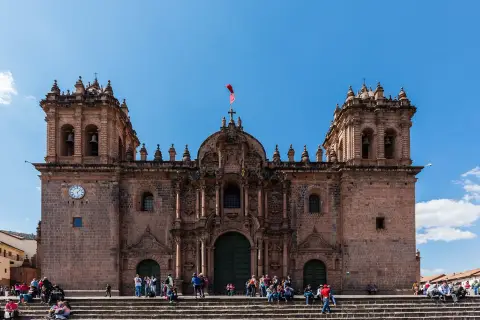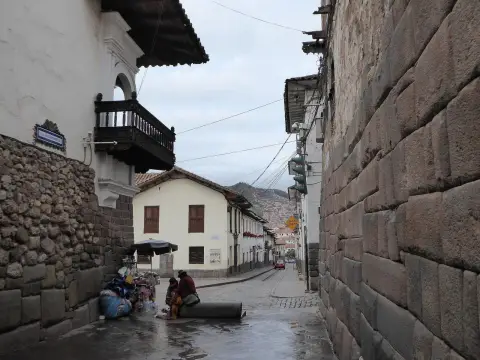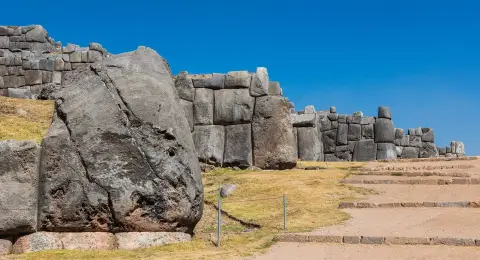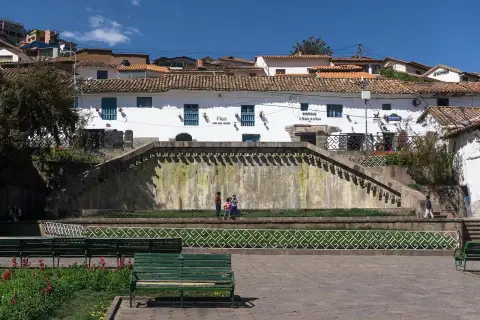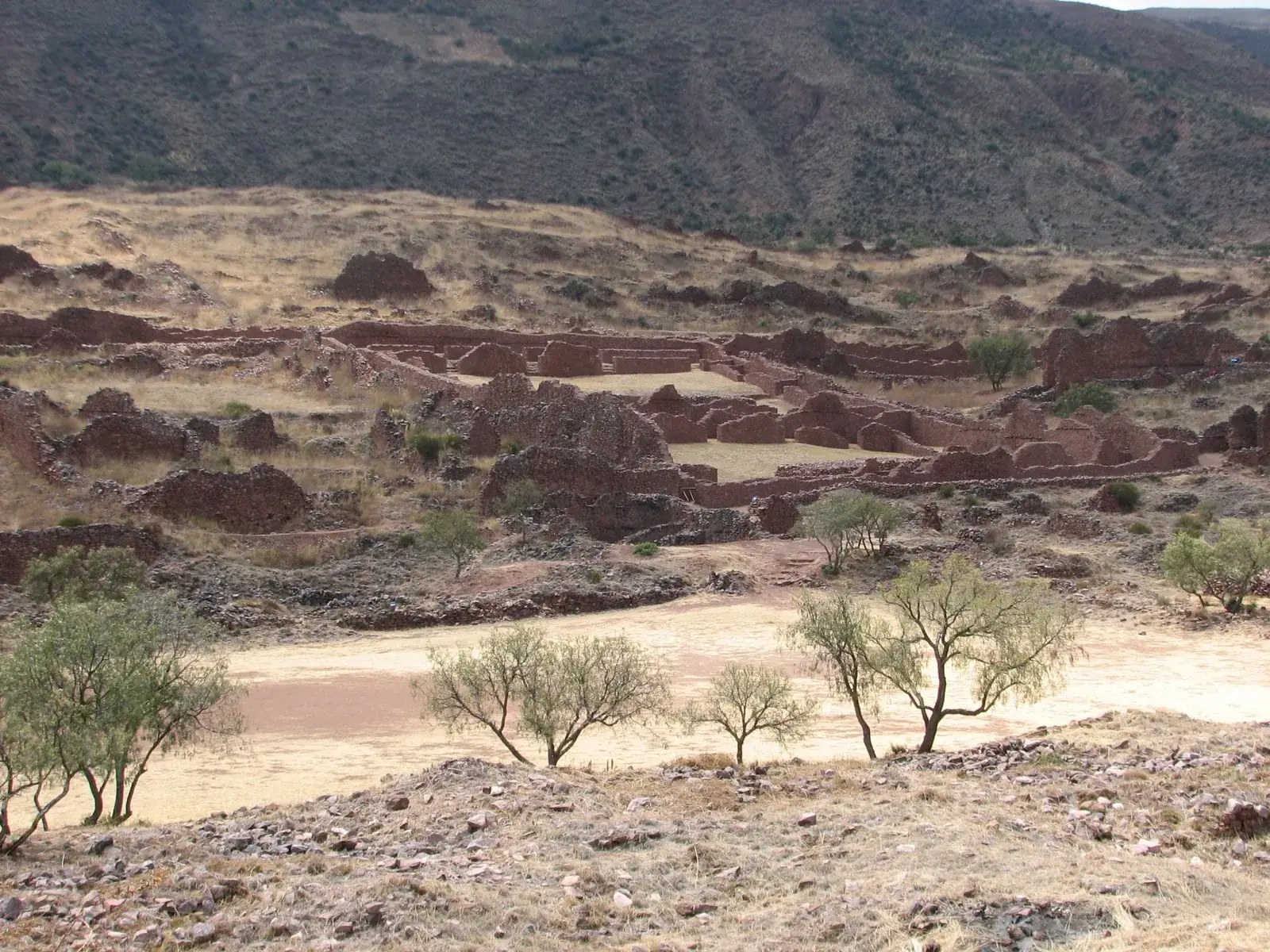
Piquillacta is a ruined Wari site, built long before the Incas, in the Lucre basin south-east of Cusco. It is a planned complex of long walled enclosures, niched halls and canals rather than a showpiece of fine stonework. Allow about an hour on site, go in the morning, and combine it with Tipón, the Rumicolca gate and the church at Andahuaylillas on a half-day South Valley trip. Confirm hours, ticket rules and transport before you go.
Map
What Piquillacta is
Piquillacta (also written Pikillaqta) is the best-known ruin of the Wari culture in the Cusco region. The Wari were a highland state centred far to the north-west, near Ayacucho, and they built planned administrative centres across much of the Peruvian Andes. This one stands in the Lucre basin, in Quispicanchi province, on the eastern side of the Cusco valley, at about 3,200 m.
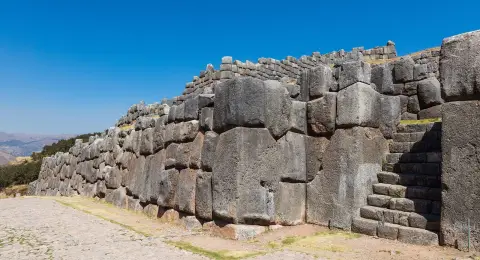
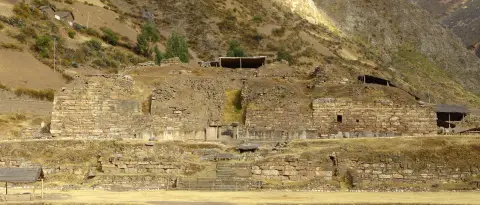
Most visitors expect Inca masonry and are surprised. The walls here are built of rough fieldstone set in mud mortar and were once covered in clay or plaster, and what survives looks plain beside the carved blocks of the Sacsayhuamán fortress. The interest lies in scale and layout: straight streets, repeated rectangular compounds and large enclosed plazas, the work of a state that planned its towns on a grid centuries before the Incas rose.
A short history
Archaeologists generally date the main construction to the middle of the first millennium AD, in the period when the Wari expanded into the Cusco area, and place the occupation between roughly the 6th and 11th centuries. The exact dates vary between sources. The site is usually read as a provincial centre for administration and ceremony, placed where the Wari could control the corridor leading from the Cusco valley towards the high plateau to the south.
The ending is unusual. Excavations suggest that the complex was left before it was finished, with some doorways sealed with clay, and that a large fire followed. The researcher Gordon McEwan, who led digs here from the late 1970s, argued that local people may have burned it as Wari power weakened. The wider story of the Wari and their neighbours is covered in pre-Inca civilisations of Peru, and the Incas, who came later and reused the same valley, appear on the Cusco guide.
Tours and activities
Bookable online, chosen for their traveller reviews.
-
★ Top rated From €23 per person
-
★ Top rated From €22 per person
-
★ Top rated From €23 per person
-
★ Top rated From €17 per person
What you see on site
The visit is a walk through enclosures along marked paths. The core is a group of long rectangular compounds with high walls, entered by narrow doorways, and a large central plaza that was probably the focus of ceremony and administration. Look for the niched halls, rooms whose walls hold rows of small recesses, which excavators interpreted as ceremonial spaces. Wall tombs and an offering pit with skulls were found during the digs, though nothing of that kind is displayed in the open.
Traces of plaster still cling to some walls, a reminder that the surfaces were once smooth and finished. The site is also linked to canals, terraces and reservoirs fed by streams from the hillsides, and the hills around it carry native cactus and scrub. Information signs are limited, so reading about the site first helps a lot.
Getting there from Cusco
Piquillacta lies on the main road that runs south-east from Cusco towards Sicuani, roughly 30 km from the city. By car or taxi the drive is usually around 40 minutes to an hour, depending on traffic through the eastern suburbs. Public buses and shared vans use the same road and can set you down near the entrance, but services are less frequent than on the Sacred Valley routes and the walk from the road is short rather than non-existent, so check where to get off.
Most travellers see it on an organised South Valley half-day, which stops at Tipón and often at the church of Andahuaylillas as well; the Cusco tours page shows how those are usually structured. A private taxi for the morning is a flexible alternative if you want to linger, and it avoids the problem of getting back to the road when it is quiet.
Combining it with other stops
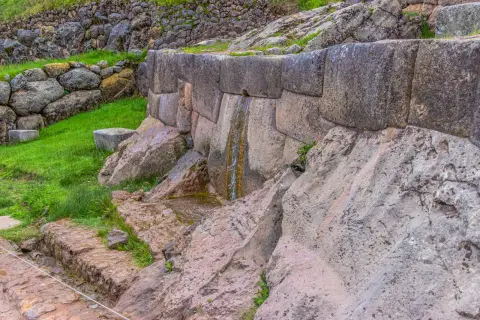
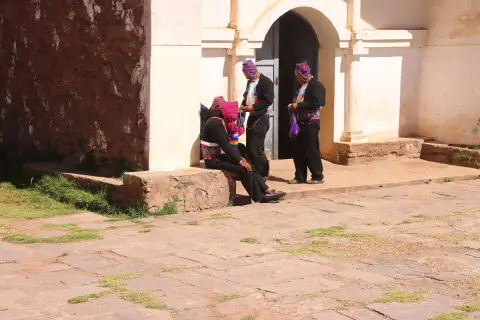
The South Valley is a sequence of sites strung along one road, so Piquillacta is rarely visited alone. Tipón, an Inca complex of terraces and water channels, is the stop most often paired with it. Rumicolca, a large stone gateway of Inca construction built on older foundations, stands close by. The lagoon of Huacarpay offers birdwatching nearby, and the church of Andahuaylillas, known for its painted interior, is a common last stop before returning to town.
Pairing a Wari site with Inca ones makes the valley easy to read: the Wari planned a provincial town here, and the Incas later rebuilt and reused the same landscape. For other ruins near the city, the Qenqo, Puka Pukara and Tambomachay page covers the northern group, and things to do in Cusco helps you weigh a South Valley morning against them.
Tickets, hours and the best time
Piquillacta is normally included in the Cusco Tourist Ticket (boleto turístico), the multi-site ticket sold in Cusco, rather than sold separately at the gate. Which circuit includes it, the validity period and the price have changed over time, so check the current rules with the official ticket office. Sources disagree on opening hours and closing time, so treat any figure you read as provisional.
Go in the morning. The light is better for photographs of the walls, the site is cooler, and there is little shade for the rest of the day. The dry season, roughly May to September, gives the clearest skies and driest paths, but the site is open all year and the hills turn green in the rains. Bring a hat, sun protection and water; there is not much on site beyond the ruins themselves.
Who it suits and how long to stay
Piquillacta suits travellers who enjoy archaeology, anyone with a few days in Cusco who has already seen the main Inca sites, and people who like quiet places with few tour groups. It suits less well those who want carved masonry and big views, or who have time for only one half-day trip; in that case the Sacred Valley may give more for the same hours. Families with children usually do best on the shorter version, with the plaza and a few enclosures.
Plan about an hour on site, and half a day if you add Tipón and Andahuaylillas. Respect the ruins: do not climb the walls or take stones, and follow the guidance on responsible travel. If you want a base near the south road, see where to stay in Cusco.
Where to sleep
-
Find hotels
Plaza de Armas and historic centre
Everything on foot, at the price of noise and crowds
-
Find hotels
San Blas
Artisans' quarter with steep lanes and views, a short walk uphill
-
Find hotels
All of Cusco
Compare every area and price level in one search
Frequently asked questions
Is Piquillacta Inca or Wari?
It is Wari, which makes it older than the Incas by several centuries. The Incas later used the same valley, but the planned complex of straight walls and enclosures at Piquillacta belongs to the earlier highland state.
How long does a visit to Piquillacta take?
About an hour is enough to walk the main enclosures and the central plaza. A South Valley half-day that adds Tipón and Andahuaylillas takes around five hours, including driving from Cusco.
Do I need the Cusco Tourist Ticket for Piquillacta?
Piquillacta is usually covered by the Cusco Tourist Ticket rather than sold separately. Circuits, validity and prices change, so confirm at the official ticket office in Cusco before you travel.
Can I visit Piquillacta without a tour?
Yes. Buses and shared vans run along the road towards Sicuani and a taxi from Cusco is simple to arrange. A tour is easier if you want to see several South Valley sites in one morning. The Cusco tours page explains the usual formats.
What is the best time of day to go?
Early morning, when the air is cool, the light is good on the walls and the few groups have not yet arrived. The site has little shade, so afternoons can feel hot and exposed.
Is Piquillacta worth it compared with Sacsayhuamán?
It is a different experience. Sacsayhuamán has monumental Inca stonework close to town, while Piquillacta shows a planned Wari complex with plain walls and few visitors. See Sacsayhuamán to compare.
Is there food or a shop at Piquillacta?
Do not rely on it. Facilities on site are basic, so bring water and a snack, and plan lunch in Cusco or in a town on the route.