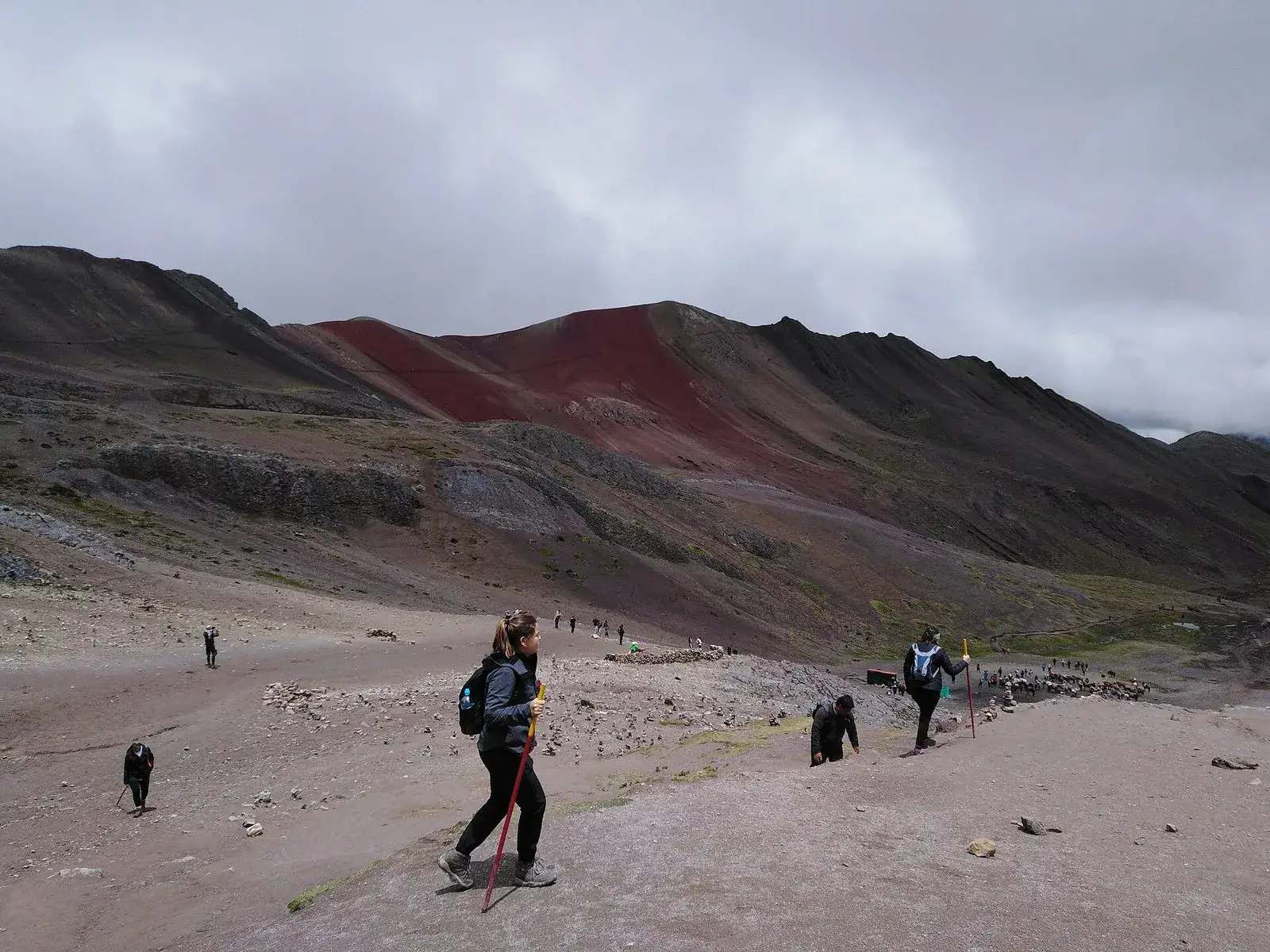
It depends. Yes, if you are well acclimatised, enjoy high-altitude walking and want a big day in the Andes. No, if you are in your first days at altitude, have a heart or lung condition, dislike crowds, or expect the vivid colours of edited photos. For many travellers, Humantay Lake or a different hike gives a better return for the effort.
What you get for the effort
The colourful striped hillsides come from mineral layers exposed on the slopes, and on a bright, dry day the bands of red, yellow, green and purple are genuinely striking. The surroundings are also impressive: bare high-altitude ridges, grazing alpacas and views toward glaciated peaks. For the route and the landscape, see Rainbow Mountain.
But the colours are weather-dependent. In cloud, flat light or after a dusting of snow, they can look dull, and even in good light they are usually softer than the heavily saturated pictures you see online. Be prepared for a mild disappointment if you expect the photographs.
The experience is also shaped by the crowds. In the dry season, the main viewpoint can be crowded in the middle of the morning, and people queue for the classic photographs. Starting early or choosing a quieter alternative route can ease this.
The costs
Early start: most day tours leave Cusco in the small hours and return in the afternoon or evening, with long hours in a vehicle.
Altitude: the viewpoint is around 5,000 m, which is higher than anything else on most itineraries. Even fit people can feel unwell, and the final climb is breathless.
Effort: the walk is moderate in length but hard because of the thin air. Horses are sometimes offered on the trail, which some people use, though riders should consider whether that is appropriate and safe.
Cost level: the day tour is inexpensive compared with many activities in Peru, but local entry fees can be extra.
Weather: cold, wind and sudden storms are common. Bring layers and rain protection.
How the day unfolds
The day starts in the dark with a pickup from your hotel, followed by a long drive through the valley and over mountain roads, with a breakfast stop on the way. From the trailhead, the walk climbs gradually across open high ground, with the final stretch to the viewpoint the steepest part. Most people stop often to catch their breath, and that is entirely normal.
At the top, the time is limited: a short stay to look, take photographs and rest before heading down. Lunch is usually served on the return, and the drive back to Cusco takes a good part of the afternoon.
Expect to be cold at the start, hot in the middle and tired at the end. A small day pack with water, snacks, a hat, gloves and a rain jacket covers most needs. If you are unsure whether the day suits you, read the Rainbow Mountain for the route in detail and ask your operator what the schedule involves.
Better-value alternatives
For many visitors, the time and the risk are better spent elsewhere. Humantay Lake is lower, shorter and gives a dependable glacial view, and our Rainbow Mountain versus Humantay sets them side by side.
If you want the colours with fewer people, some travellers choose a longer trek in the Ausangate region, where the coloured mountain is part of a multi-day walk through high, remote landscapes; see the Ausangate. That is a bigger commitment, but it is a quieter way to see similar scenery.
If you are still adjusting to the altitude, a day in the Sacred Valley or an easier hike gives you a better start and keeps the big day for later in your trip. Plan your acclimatisation in advance.
Who should skip it, and the verdict
Skip it if you have only a few days in Cusco, are not acclimatised, dislike early starts and crowds, or want reliable scenery for your photographs. Humantay Lake, a Sacred Valley hike or a day at the ruins around Cusco may use your time better.
Go if you have spent several days at altitude, are reasonably fit, enjoy long days in the mountains and accept that the colours may vary. Aim for a dry morning, an early departure and a reputable operator.
The verdict is a conditional yes: worthwhile for the right person, over-hyped for the wrong one. The answer changes with the weather forecast and your health on the morning. When in doubt, choose the lower and easier option.
Frequently asked questions
Are the colours as bright as in photos?
Usually not. Photos are often edited, and the real colours depend on light and weather. Clear, sunny conditions give the best result.
Is there a less crowded option?
Some operators offer alternative routes or earlier departures. Ask what they offer and how they handle crowds.
How many days should I wait before doing Rainbow Mountain?
Most advice is to spend at least two or three nights at altitude first, and longer if you feel unwell. See our acclimatisation for general principles, and ask a doctor about your own situation.
What happens if I feel sick on the trail?
Tell your guide at once. Mild symptoms may ease with rest, but worsening headache, vomiting or confusion mean you should descend. A reputable operator carries a first-aid kit and has a plan for emergencies.
Is it dangerous?
The main risks are altitude sickness, cold and exhaustion, not technical terrain. They are manageable with acclimatisation, the right clothes and a willingness to turn back.
Can I hire a horse?
Horses are sometimes offered on part of the route for an extra fee. They do not reduce altitude risk, and you should ask the operator about how the animals are treated.
What is the best time of year to go?
The dry months, roughly May to September, give the clearest views, though mornings are very cold. In the rainy season, cloud, mud and snow can hide the colours.