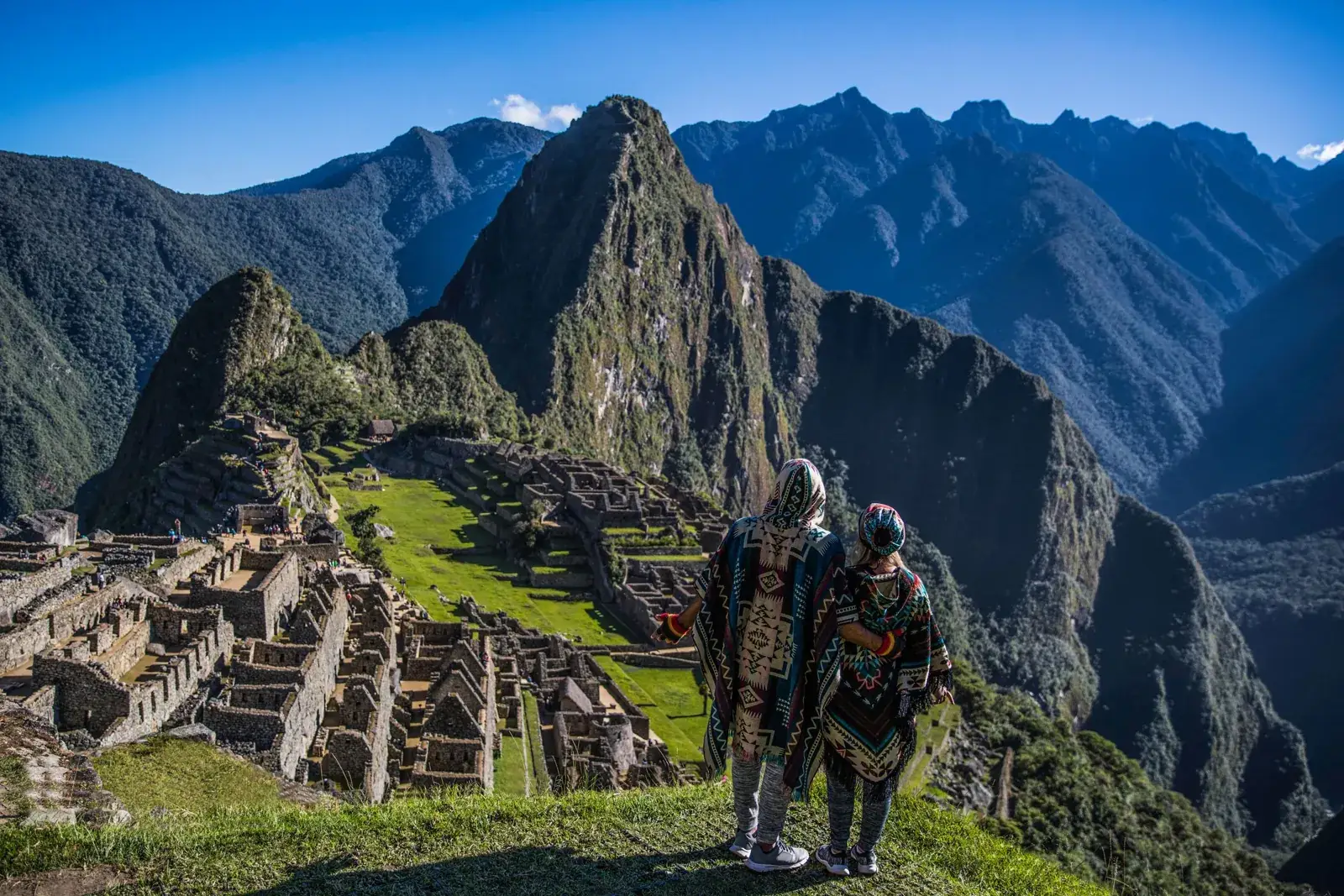
A good honeymoon route is two nights in Lima, three in the Sacred Valley, one in Aguas Calientes for Machu Picchu, three in Cusco and three on the beach at Máncora. It front-loads the cultural part, keeps altitude gentle, and ends with warm sea and rest, so the trip finishes on its slowest days.
The route has four flights, the scenic train, and two points where a private transfer or tour makes a real difference. Everything else can be done at a relaxed pace with plenty of unscheduled time.
The design: culture first, sea last
The route runs from the capital to the mountains and ends at the coast. Lima gives a soft start and the best dining of the trip. The Sacred Valley and Cusco give the Inca heritage and Machu Picchu. Máncora, on the northern coast, gives beaches and warm water, which is the right way to end a long honeymoon trip after early starts and altitude.
It differs from the 10-day Peru route and the 14-day route because the last three nights are for doing nothing on purpose. If you prefer to see more of the Andes, the better trade is to add a night in the valley rather than a fourth city.
The practical logic is the same as for any first trip: keep the highest sleep for later and fix the Machu Picchu date before anything else. Peru for couples gives the wider view of what suits two people travelling slowly.
Booking order, flights and the shape of the trip
Book the Machu Picchu entry ticket and the train first, as these have limited capacity and fix the middle of the trip. See Machu Picchu tickets and when to book. Next, book the flights: Lima to Cusco, Cusco to Lima, and Lima to the north. The last leg is the one to plan carefully, because Máncora is served by a small airport in the region, and the trip may involve a flight to a nearby city followed by a road transfer. Check which airport the airline uses and how long the transfer takes.
Hotels come last, though a boutique stay in the valley or the beach can sell out in the high season, so do not wait long. Ask any property about transfers, room types and whether a late checkout is possible on departure days. For a honeymoon, tell hotels when you book; some offer a small gesture, but do not count on it. Peru for luxury travellers describes the upper end of the options.
Days 1 and 2: Lima
Two nights in Lima are enough for rest and one great meal. Day one is a recovery day with a walk along the cliffs in Miraflores at sunset. On day two choose a museum or a private food experience, then a long dinner. Lima is where a tasting menu or a pisco tasting belongs, because you are at sea level and in no hurry.
Book a private transfer from the airport if arriving late. The roads are congested and a driver waiting with a sign removes the first stress. Lima covers the districts, and Barranco is the most romantic for evening walks, with its old houses and bars.
Avoid a dawn start on day two. The flight to Cusco on day three is early, and the couple that arrives rested enjoys the valley more. Reconfirm the airport transfer the evening before, and keep documents and the Machu Picchu booking ready for the next days.
Days 3 to 5: the Sacred Valley
Fly to Cusco in the morning and go straight to the valley, where boutique and hacienda-style stays are the main draw. Choose a property by its setting: a garden with views, a quiet location and a good restaurant matter more here than a central address. Do not choose by name alone; read recent reviews, and ask about altitude and heating, since evenings can be cold.
Day three is for rest. On day four, a private guide and driver make a small difference: stops at Pisac, Moray and the Maras salt pans can be timed to avoid the tour groups. Day five can be a late start, a spa or a short walk, followed by a visit to Ollantaytambo, whose fortress and station are your gateway to Machu Picchu.
The valley sleeps lower than Cusco, so it is the right place to adjust to the Andes. The Sacred Valley helps you choose a base, and Ollantaytambo describes the town.
Day 6: the train and Machu Picchu
Take the scenic train from the valley to Aguas Calientes on day six. The upper-tier services offer panoramic windows and a more comfortable cabin, and the ride is itself a highlight. Check the company's service classes and what each includes; the train comparison helps you choose.
Spend the night in Aguas Calientes to avoid a rushed return. Visit the citadel at the time on your ticket. Some couples aim for early entry to see the first light, but weather often hides the sunrise; sunrise at Machu Picchu explains what to expect. A private guide for the citadel can be worth it for a quieter and better-explained visit, but book through a licensed operator.
A trek is another way to arrive, though it is a different trip: train or trek compares the two. For a honeymoon, the train is the sensible choice, as the aim is to stay rested and have time left for the second half.
Days 7 to 9: Cusco without rush
Return to the valley by train and transfer to Cusco for three nights. Choose a hotel in a quiet colonial building near the Plaza de Armas or in San Blas, with good heating and a courtyard. Cusco is at about 3,400 m, but by now the couple has been several days at altitude.
Spend day eight on a slow walk: the cathedral, the Qorikancha and the artisan streets of San Blas, with a long lunch. Day nine is the free day: a massage, a cooking class for two, or a visit to Sacsayhuamán at the end of the afternoon, when the light is soft.
Keep one evening for a special dinner, and drink little alcohol on the first night. If anyone has headaches or trouble sleeping, rest and read altitude sickness. Cusco lists the neighbourhoods, and day trips can be replaced by more time at the table.
Rest days, private tours and upgrades
A honeymoon route works when every second day has nothing fixed. Here the free days are day three in the valley, day nine in Cusco and the beach days, and they should stay free even if the itinerary looks thin. Jet lag, altitude and early trains all take more out of a couple than a sightseeing list suggests.
Private tours are worth buying where they remove a constraint: the airport transfers, the valley day and the Machu Picchu visit. Elsewhere a group or a taxi is fine. Ask any operator what is included, how many people share the vehicle, and what happens in bad weather. Always use licensed operators and keep the contact details of the hotel and the operator on your phone.
Upgrades have a clear order of value. A better room in the valley and a higher train class add comfort at the most photogenic moments; a villa at the beach adds privacy at the end. Spending more in Lima is rarely needed, since the city is a short stop. See train or trek if one of you wants a walking option.
Days 10 to 12: Máncora and the journey home
On day ten fly from Cusco to Lima, then north to the airport serving Máncora, and transfer to the coast. It is a long day, so keep it free of plans and book a hotel with a pool or direct beach access. Allow a buffer for the connection in Lima, as a delay would affect the leg that follows.
Days eleven and twelve are for the sea. Máncora is known for surf and relaxed beach hotels. Boutique and villa-style options exist at several price levels, so choose by the beach, the noise level and the distance from town. Whale-watching and sunset boat trips run in certain months; check the season. Máncora describes the area.
On the last day, plan the return to Lima with a margin of at least half a day before an international flight. If you want an even quieter finish, give the beach a fourth night and take one night out of Lima at the start. Upgrades worth considering are private guides in the valley, a premium train and a villa on the coast.
Frequently asked questions
Is 12 days enough for a Peru honeymoon?
Yes, if you accept one region plus the beach. It covers Lima, the valley, Machu Picchu and Cusco without long drives, and the beach days give the rest of the trip a calm ending.
When is the best time of year for this route?
Dry-season months suit the Andes, while the northern coast is warmest in the southern summer. There is no month that is perfect for both, so decide which you value more.
Is it better to stay in Cusco or the Sacred Valley?
For a honeymoon the valley is quieter, lower and has boutique stays, while Cusco is richer in streets and restaurants. This route uses both. See Sacred Valley or Cusco as a base.
Should we book private tours?
A private driver and guide are worth considering for the valley day and for Machu Picchu, because they give flexibility. Group tours are cheaper and fine for the city days.
How do we reach Máncora?
Usually by flight to the regional airport and a road transfer, or by a long overland journey from Lima. Check the airline's current routes and the transfer time before booking.
Is the altitude a problem for a honeymoon?
It can be, but this route sleeps lower at the start. Avoid alcohol on the first Cusco night and ask a doctor about any health conditions.
Can we swap the beach for the Amazon?
Yes, though the Amazon is humid and active rather than restful. Máncora suits couples wanting rest, while the Amazon suits those wanting wildlife.