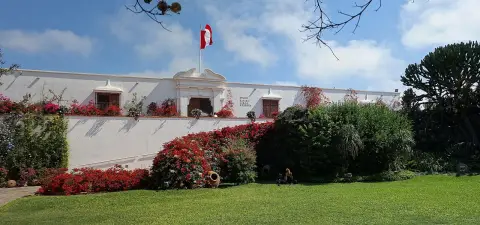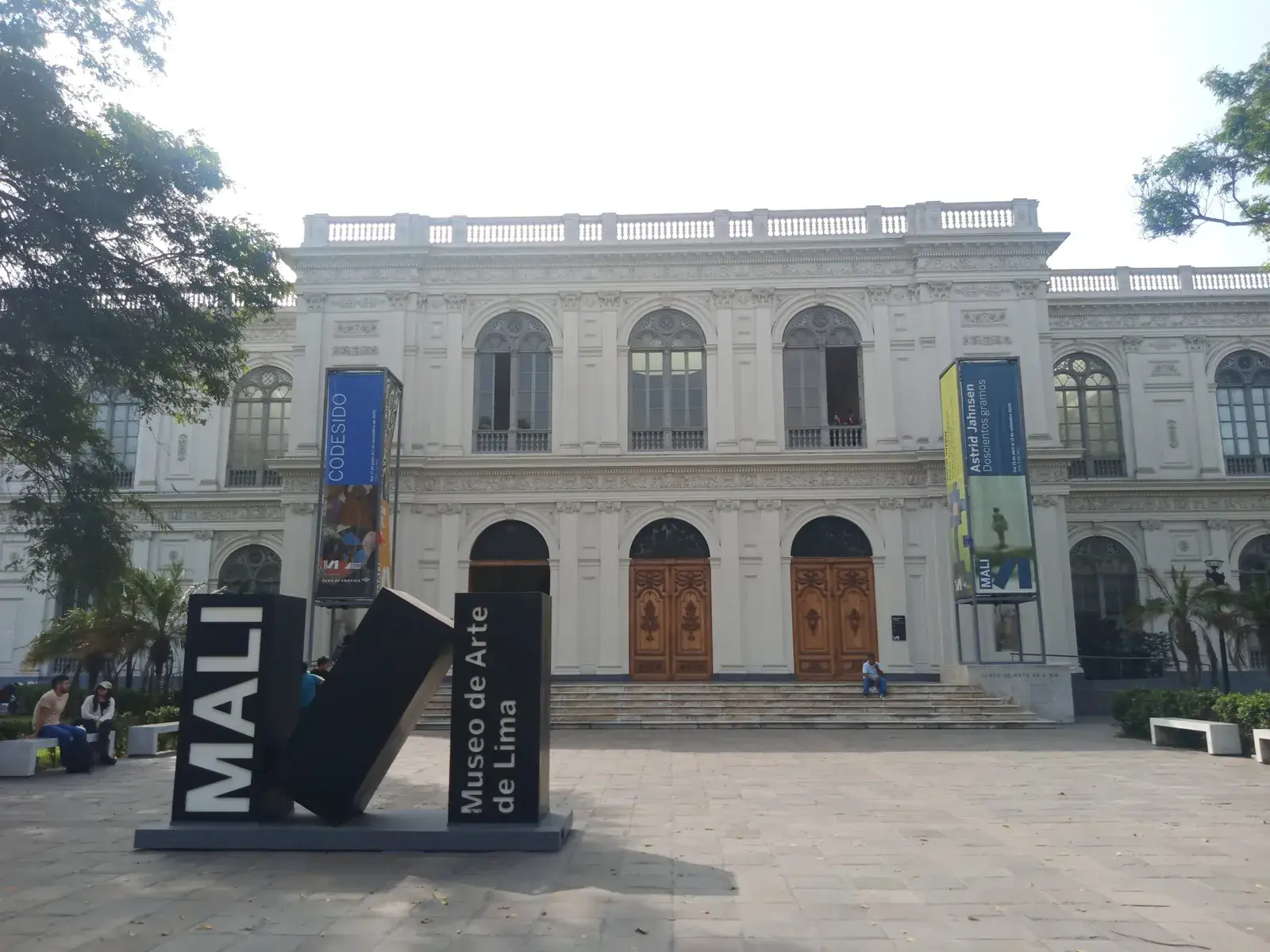
The Museum of Art of Lima, known as MALI, is the city's main art museum. It occupies the Palacio de la Exposición, built for an 1872 fair, in the Parque de la Exposición next to the historic centre. Its collection runs across almost 3,000 years, from pre-Columbian ceramics and textiles to colonial, republican and contemporary work. Allow two to three hours, more if a temporary exhibition interests you.
Map
What MALI is
The Museo de Arte de Lima, abbreviated MALI, opened in 1961 and is a private institution, supported by admission fees, members and donations rather than run directly by the state. Its collection spans almost 3,000 years of art made in what is now Peru, and it is the place in the capital where you can follow that whole story in one building, from the earliest ceramics to work by living artists.
That range is what separates it from the Larco Museum, which concentrates on pre-Columbian objects. MALI is an art museum in the wider sense: it hangs paintings, shows sculpture and textiles, and also runs a programme of temporary exhibitions. If you are choosing between the two for a short stay in Lima, the difference is simple. Larco is the better introduction to ancient cultures, while MALI shows how Peruvian art developed afterwards and what artists are doing now.
The building and the park
The museum is housed in the Palacio de la Exposición, a palace put up for the 1872 national exhibition. The façade is Italianate and was designed by the Italian architect Antonio Leonardi, who lived in Lima. The iron structure behind it is attributed to the workshop of Gustave Eiffel and dates from around 1870-71. Seeing a cast-iron frame inside a neoclassical shell is part of the interest of the place.
The palace stands in the Parque de la Exposición, laid out on the site of the old Guadalupe Gate, one of the gates of the colonial city wall that was pulled down in 1868. The park later received the Moorish and Byzantine pavilions built for the centenary of independence in 1921. It is a pleasant place to sit before or after the visit, and it sits within walking distance of the historic centre.
Tours and activities
Bookable online, chosen for their traveller reviews.
-
★ Top rated From €52 per person
-
★ Top rated From €85 per person
-
★ Top rated From €94 per person
-
★ Top rated From €55 per person
What you will see
The permanent display is organised broadly in time. The earliest rooms hold pre-Columbian ceramics and textiles, which give context for the sites you may visit elsewhere, such as Pachacamac. The colonial period brings religious painting and decorative arts, and the republican period includes the academic painting of the nineteenth century. Painters such as Teófilo Castillo and Federico del Campo are among the names associated with the collection.
Twentieth-century and contemporary work is a major part of the museum's identity, but not all of it can be shown at once. The contemporary holdings, over a thousand works, have been described as largely kept in storage while the museum waits for additional space, so the part you see will depend on what is on the walls that season. Galleries on the upper floor of the palace were renovated and reopened in 2015.
Temporary exhibitions
MALI runs temporary exhibitions through the year, mixing Peruvian and international artists. Past programmes have included photographers, conceptual artists and major European names, as well as historical shows such as one in 2018 on the watercolours of the Codex Martínez Compañón, an eighteenth-century record of life in northern Peru, with later illustrated works on the country.
This changes the value of a visit. Two trips a year apart can feel like different museums, so check the museum's own website before you go and decide whether the current shows appeal to you. If one does, plan more time. If none does, the permanent rooms alone still justify a short visit. Be careful with dates quoted on third-party sites, which are often out of date.
Library, archive and the quieter side
Not everything at MALI is on the gallery floor. The Manuel Solari Swayne Library and the Peruvian Art Archive together form what is described as the main art library in Peru, mainly of use to researchers and students. The museum also supports a digital archive of Peruvian art, ARCHI, which offers free educational material online.
For an ordinary traveller these are not reasons to go, but they explain why the museum is treated as a reference point by people who work on Peruvian art. If you are curious about a particular artist or period before or after your visit, the digital material is a useful place to continue reading, and it is available without travelling anywhere.
Getting there and how long to allow
The museum is at the edge of the historic centre, in the Parque de la Exposición, so it is easy to reach from the central districts. From Miraflores the usual choice is a taxi or ride-hailing car, or the Metropolitano bus, which runs along the main corridor towards the centre. Check the current route and stop with the operator before relying on it.
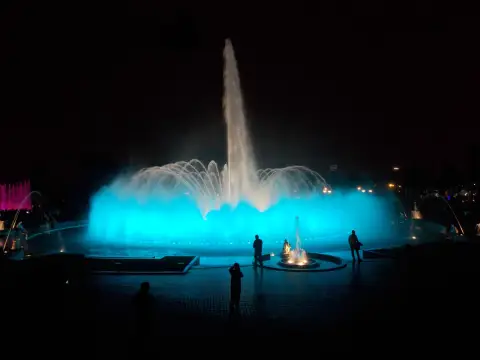
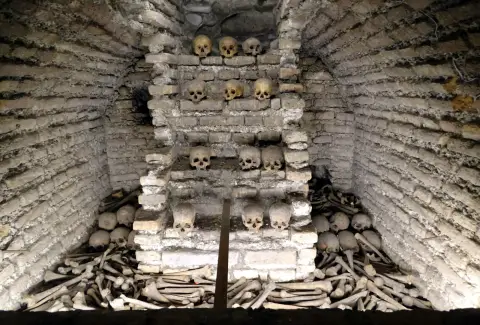
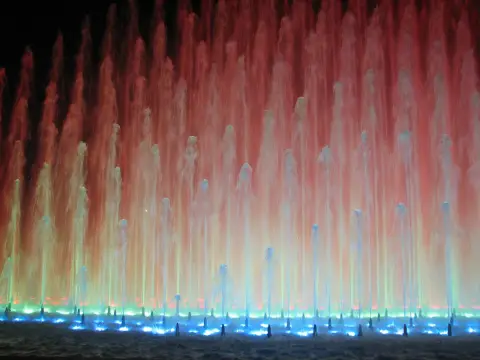
Allow two to three hours for the permanent galleries and one temporary show. A shorter visit of about an hour is possible if you only want the highlights. The park is next to the Magic Water Circuit, the evening fountain park, so the two fit into the same outing. For the colonial core, pair it with the San Francisco Convent and catacombs.
Opening days, hours and ticket prices change, and some museums close on one weekday, so check before going.
Who it suits and how to combine it
MALI suits visitors who like art, those with a rainy or hazy day to fill (Lima's winter sky is often grey), and anyone who wants to place Peru's pre-Columbian and colonial heritage in a longer line. It is less suited to a traveller who wants only archaeology, who may prefer the Larco Museum and the site visits listed under things to do in Lima.
The museum is a sensible half-day anchor. Spend the morning inside, then walk or ride into the historic centre for lunch and the plazas, or return to the park in the evening. If you are on a guided city programme, look at the Lima tours to see whether a stop here is included, since some itineraries pass through the historic centre without entering any museum.
Where to sleep
-
Find hotels
Miraflores
Easy first base: restaurants, parks and the cliff-top walk
-
Find hotels
Barranco
Art, nightlife and a seaside feel, quieter by day
-
Find hotels
San Isidro
Calm business district with parks, close to Miraflores
-
Find hotels
Historic Centre
Colonial sights on the doorstep, busy by day and quiet at night
Frequently asked questions
How long does a visit to MALI take?
Two to three hours is a comfortable visit for the permanent galleries plus one temporary exhibition. If you are short of time, an hour covers the main highlights.
Is MALI better than the Larco Museum?
They do different jobs. The Larco Museum focuses on pre-Columbian objects, while MALI covers almost 3,000 years and goes on to colonial, republican and contemporary art. Many visitors with enough time see both.
Where is the Museum of Art of Lima?
It is in the Palacio de la Exposición, inside the Parque de la Exposición, at the edge of Lima's historic centre. It is a short ride from Miraflores and walkable from parts of the old town.
Can I buy tickets online?
Check the museum's official website, since ticketing arrangements and prices change. Do not rely on third-party sellers without confirming that the ticket is valid for the date you want.
Is the museum open every day?
Museums in Lima commonly close one day a week, and holiday hours differ. Look up the current opening days on the official website before you travel, especially on public holidays.
Does the museum show contemporary art?
Yes, in temporary exhibitions and in parts of the permanent display. The museum owns over a thousand contemporary works, but much of this has been kept in storage, so what you see depends on the season.
Can I combine MALI with the Magic Water Circuit?
Yes, they are both in the Parque de la Exposición area. A daytime museum visit followed by the fountains in the evening works well. See the Magic Water Circuit page for the park's own hours and tickets.