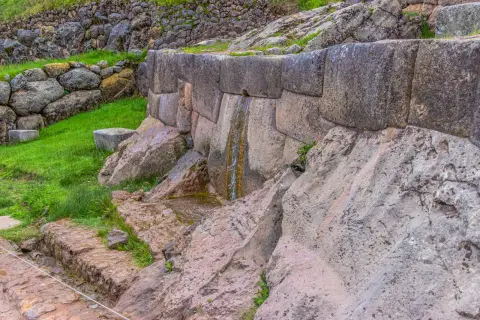
Tipón is an Inca archaeological park in the South Valley, roughly 22 km south-east of Cusco along the road to Puno. Its main attraction is a staircase of 13 monumental terraces fed by a spring whose water still runs through stone channels and fountains. Allow about 1.5 to 2 hours on site, go in the morning, and combine it with Pikillacta and the church of Andahuaylillas on a half-day trip from Cusco.
Map
What Tipón is
Tipón is an Inca estate built around water. A natural spring on the hillside is collected, divided and sent down a series of stone-walled terraces, and part of that system still carries water today, which is what sets the site apart from most ruins around Cusco. Archaeologists generally read it as an administrative and ceremonial estate, possibly connected to the Inca elite, rather than a town or a fortress.
The park lies on the road towards Puno in the South Valley, a different direction from the Sacred Valley that most visitors head for. That is part of the appeal: it is usually quieter than the big names, and the visit is mostly about stonework, engineering and the shape of the hillside rather than a single famous monument. If you want a sense of how the Incas managed water and farmland, it is one of the clearest places in the region to see it.
A short history
People used the area long before the Incas, with settlement reported from roughly 1000 BCE, but the terraces and channels visitors see belong to the Inca period, which ended with the Spanish conquest. Excavation began in the 1970s and has continued in phases, so some sectors are better restored than others and some remain only partly understood.
The site became a national archaeological park in 1984. In 2006 the American Society of Civil Engineers listed it as a historic civil engineering landmark, a reminder that the main attraction here is hydraulics as much as archaeology. A wall roughly 6 km long is reported to enclose the whole property, and the park covers a few hundred hectares, far more than the short tourist circuit suggests. Much of the area is not open as a visitor route, so what you see is a small, carefully chosen part of a much larger estate.
Tours and activities
Bookable online, chosen for their traveller reviews.
-
★ Top rated From €23 per person
-
★ Top rated From €22 per person
-
★ Top rated From €23 per person
-
★ Top rated From €17 per person
The terraces and fountains
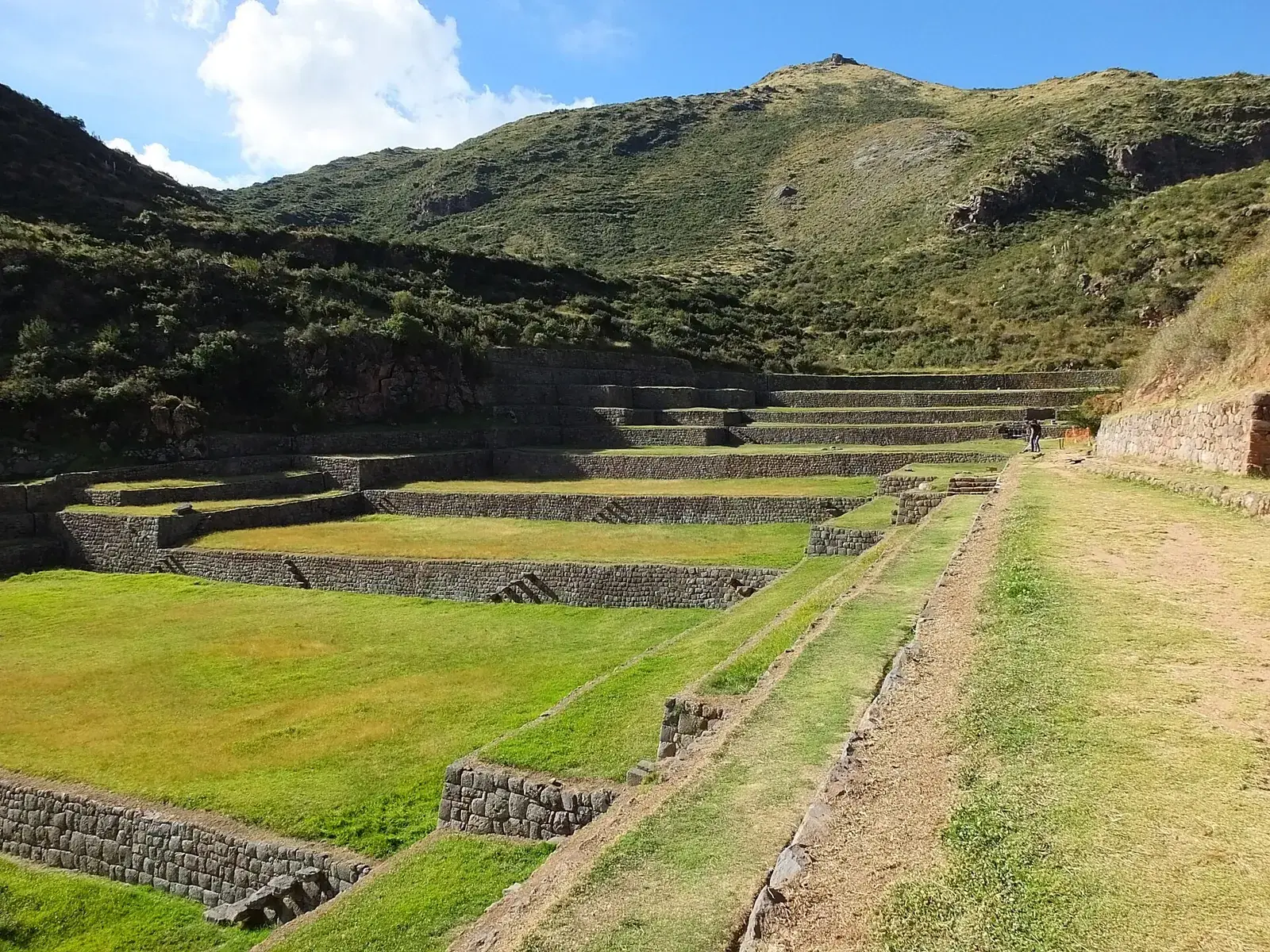
The heart of the visit is the group of 13 main terraces, built of finely fitted masonry and stepping up the slope in a broad U shape. Eleven of them are watered by the main spring and the upper ones by a canal brought from a nearby stream. Small stone stairways, projecting steps and carved channels connect the levels, and the walls are tall enough that the scale only becomes clear when you walk to the top and look back down.
Water is the real show. The principal monumental fountain collects the spring and splits it through several underground conduits that divide and rejoin, then pours it out over the terraces. A second ceremonial fountain sits to one side. In the rainy months the flow is stronger and the grass greener, while in the dry season it is a thinner but still audible trickle. Photographers do best in the morning, when sun reaches the terrace faces without harsh shadows, and the stone looks warmer.
Beyond the main terraces
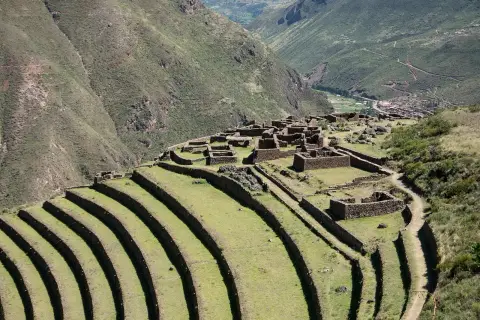
The standard route stays around the lower terraces and fountains, but the wider park holds more. Guides and signs mention an Intiwatana, which was probably used to observe the sun, a ceremonial plaza, a storage building known as Iglesia Raqui, and Cruzmoqo, the highest point, with petroglyphs. Residential sectors and a ritual group of buildings are also named in the literature.
Reaching these higher parts means a longer, steeper walk and in some places access is limited, so ask at the entrance what is open. The park rises from about 3,250 m to nearly 3,960 m, which is a similar height to Cusco at the bottom and noticeably higher at the top. If you are in your first days at altitude, stay on the lower terraces and read the advice in altitude sickness before trying the upper sectors.
Getting there from Cusco
Tipón is about 22 km from Cusco on the Puno road, normally 30 to 45 minutes by car depending on traffic leaving the city. A taxi or a private driver is the simplest option and allows a flexible stop. Shared vans and buses on the Cusco to Urcos corridor pass nearby, but you would still need to cover the last stretch up to the entrance, so check the current arrangement before relying on them.
Most visitors see the site as part of a South Valley tour, which stops at Tipón, the Wari city of Pikillacta and the church of Andahuaylillas, described among tours from Cusco. A tour removes the logistics but fixes your time at each stop, usually shorter than a self-guided visit. For a first trip, choose by whether you want a guide or a slower pace, and see things to do in Cusco for how it fits with other days.
Tickets, hours and costs
Tipón is covered by Cusco's tourist ticket system, which has a partial ticket for the South Valley sites and a general ticket for a wider list. Which one suits you depends on what else you plan to see, and prices and conditions change, so confirm both at the official ticket offices in Cusco rather than relying on a number in an article. Check also whether the site accepts cards at the entrance, since paying in cash in soles is safer; money and ATMs explains how to handle cash.
The park normally opens in daylight hours, with last entry well before closing. Opening times shift with season, holidays and works, so verify them locally. Bring a hat, sun protection and a layer for wind, as there is little shade among the terraces and the sun at this height is strong.
When to go and how long to stay
The dry season, roughly May to September, brings clear skies and dry paths, and the water in the fountains is lower but still visible. From November to March the terraces are lush and the water louder, but afternoon rain is common and the steps can be slippery. Mornings are best in either season, since cloud tends to build later in the day. For month-by-month detail see when to go.
Plan on 1.5 to 2 hours for the lower terraces, fountains and a slow walk, and longer if you climb to the upper sectors. A self-guided visit that combines Tipón with Pikillacta and Andahuaylillas takes a half day, with a lunch stop in the village below the ruins, where roast guinea pig is a local speciality and a traditional dish in this part of the Cusco region.
Who it suits and what to combine
Tipón suits travellers interested in Inca engineering, agriculture and quieter sites, and those who already have the headline ruins planned. It rewards slow looking more than quick photographs, and it is flat enough at the base for most visitors, with steeper walking only if you go higher. Families usually enjoy the running water.
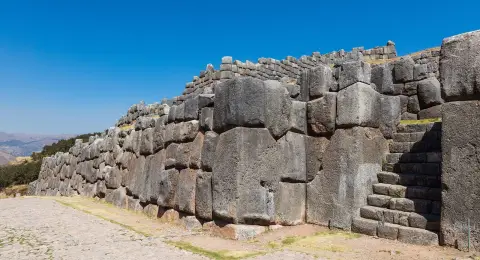
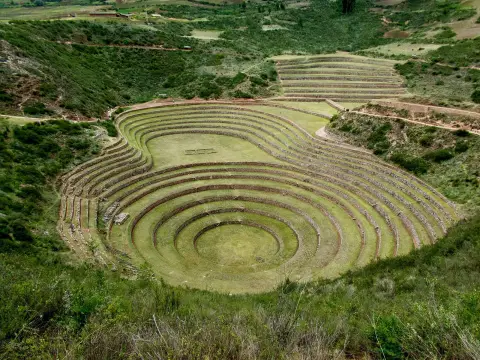
For a comparison of Inca farming terraces, Moray shows circular terraces used as an experimental farm, while Tipón shows terraces connected to a water system. If you want a fortress rather than an estate, see Sacsayhuamán, and the nearby Inca sites above Cusco can fill a different half day. Travellers based in the Sacred Valley can reach the South Valley by a longer drive, but it fits more naturally into a day from Cusco.
Where to sleep
-
Find hotels
Plaza de Armas and historic centre
Everything on foot, at the price of noise and crowds
-
Find hotels
San Blas
Artisans' quarter with steep lanes and views, a short walk uphill
-
Find hotels
All of Cusco
Compare every area and price level in one search
Frequently asked questions
How far is Tipón from Cusco?
About 22 km south-east on the road to Puno, usually 30 to 45 minutes by car. Most visitors go by taxi, private driver or a South Valley tour.
How long do I need at Tipón?
Allow 1.5 to 2 hours for the lower terraces and fountains. A half-day trip that adds Pikillacta and Andahuaylillas is the usual way to see it, and a climb to the upper sectors adds more time.
Is Tipón included in the Cusco tourist ticket?
Yes, it is part of the ticket system, which has a partial ticket for the South Valley and a general one. Confirm which suits you, and the current price, at an official office in Cusco before buying.
Is Tipón worth it if I have already seen Moray and Sacsayhuamán?
Yes if you like engineering and quiet sites, because the water channels are different from both. If you are short of time, pick it over a second fortress, and see Moray for the comparison.
Does the water still flow at Tipón?
Yes, the spring still feeds the main fountain and channels, although the flow is stronger in the rainy season. In the dry months expect a lighter stream.
Is Tipón hard because of the altitude?
The lower terraces are about the same height as Cusco and are an easy walk. The upper sectors reach almost 3,960 m and are steeper, so see altitude sickness if you have just arrived.
Can I visit Tipón without a tour?
Yes. A taxi from Cusco with a waiting time is simple, and public transport along the Puno road gets you close. Agree the return trip in advance, as vehicles are less frequent near the entrance. Compare options in tours from Cusco.